Freedom as an Economic Model

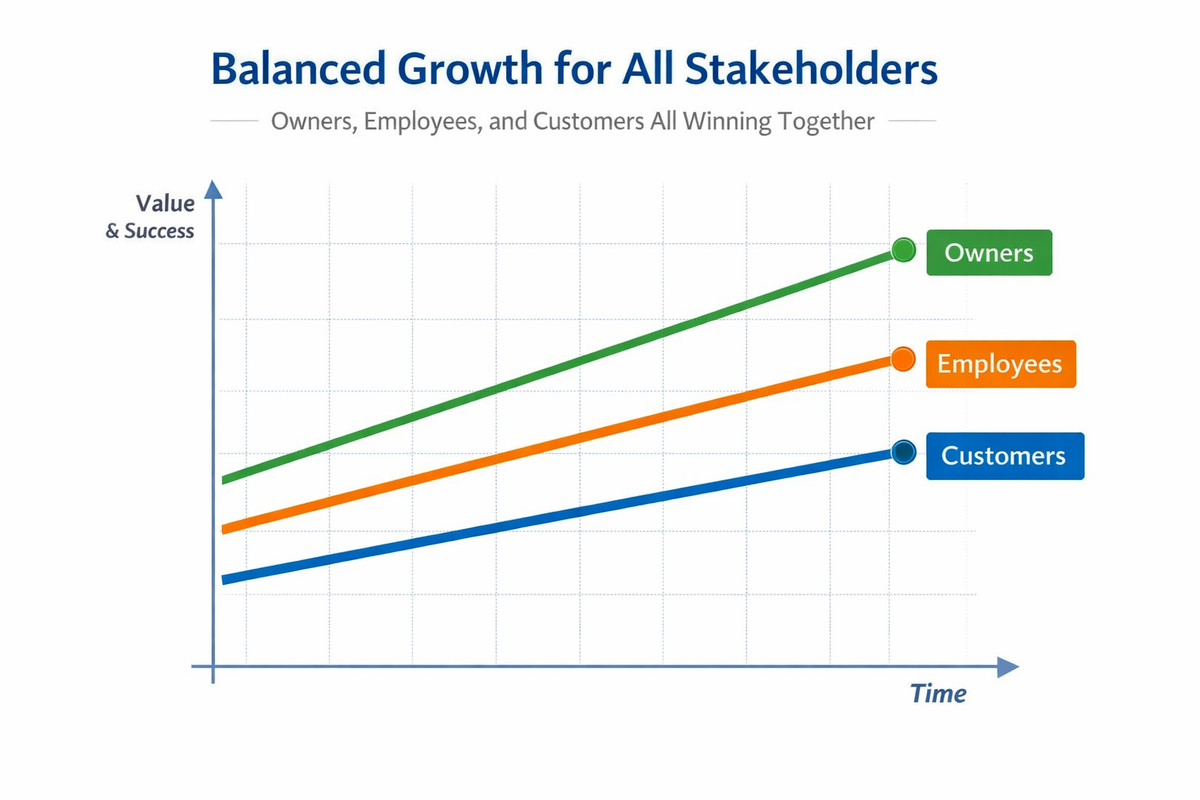
In Conscious Capitalism, John Mackey, founder of Whole Foods Market, argues that a healthy business must create value for all of its stakeholders. He describes this as a “win–win–win” model:
- A win for owners
- A win for employees
- A win for customers
A sustainable enterprise requires these three elements to remain in SYNC. A business cannot endure if one core stakeholder consistently loses while the others benefit. For example:
- A loss for owners, even if employees and customers win, is not sustainable.
- A loss for customers, even if owners and employees win, is not sustainable.
Yet increasingly, we have grown too comfortable with the following also unsustainable scenario:
A win for owners, a win for customers, and a loss or stagnation for employees.
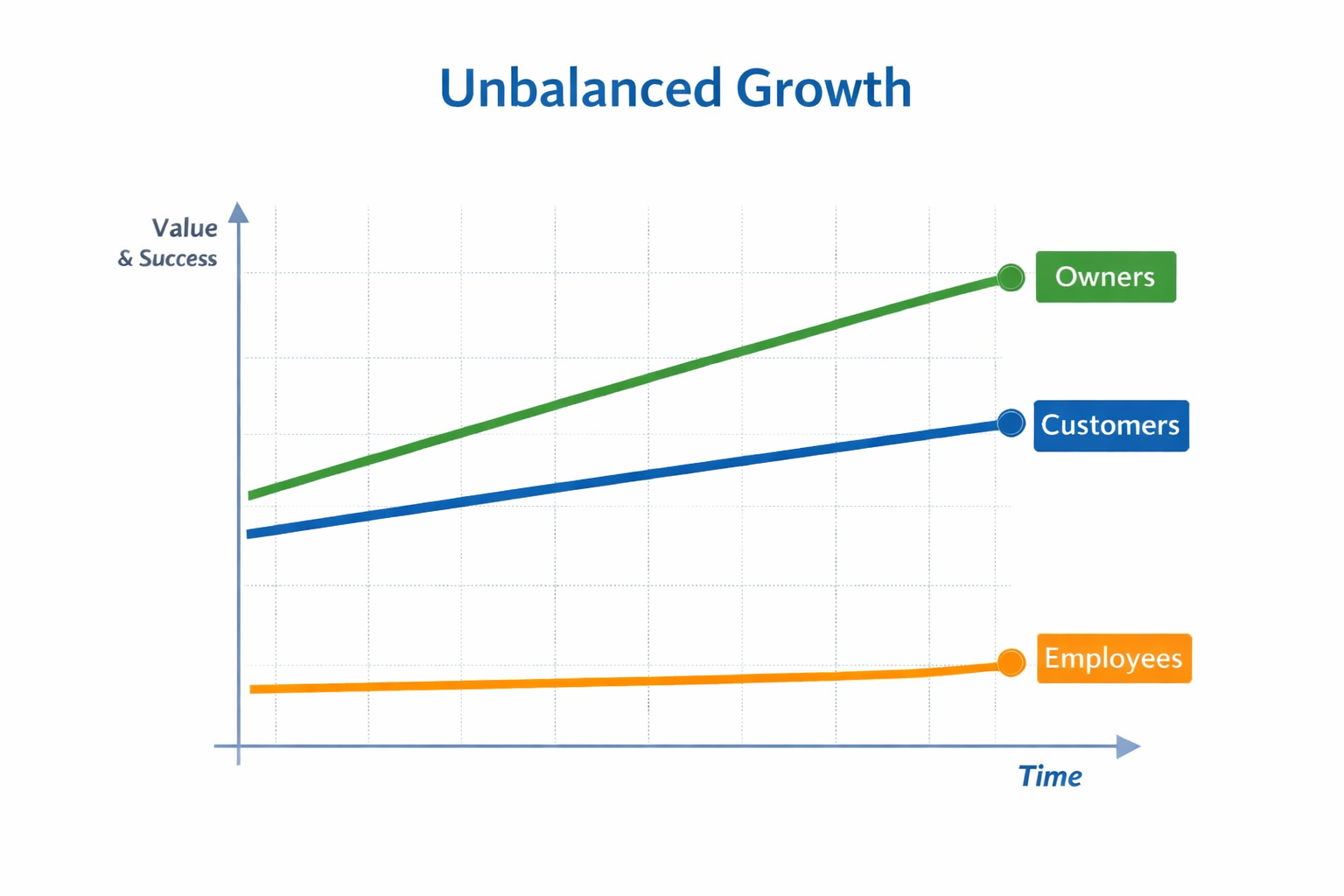
How many fully employed individuals cannot afford rent? How many rely on food pantries despite working full time? Can employment truly be considered “gainful” if it does not provide economic stability and does not grow over time? Especially if people's expenses are growing over time?
If a company’s profitability and customer value depend on employees living at or near poverty, then the stakeholder model is out of alignment. According to the principles of conscious capitalism, that imbalance is not merely unfortunate — it is unsustainable.
Reflection Questions:
- Are we being the good Stewards if we are intentionally designing economic systems that don't meaningfully take care of our people?
- By doing this are we chasing God or are we chasing Gold?
- Will being good Sheppards of the people become increasingly important, especially in the age of AI?
Mackey, J., & Sisodia, R. (2013). Conscious capitalism: Liberating the heroic spirit of business. Harvard Business Review Press.